
What is CONAN, why does it cost nearly $1 million a year, and what does it have to do with Congress?
Not Conan the Barbarian. Not Conan O'Brien. But the Constitution.

When I Googled “most famous conan” - what do you think came up?
Take a minute.
.
.
.
The AI overview said, “The most famous Conan is likely Conan the Barbarian.” It also noted that comedian Conan O’Brien is another famous Conan.
But today we’re not talking about either of those. Instead, I’m highlighting the Constitution Annotated - or CONAN.
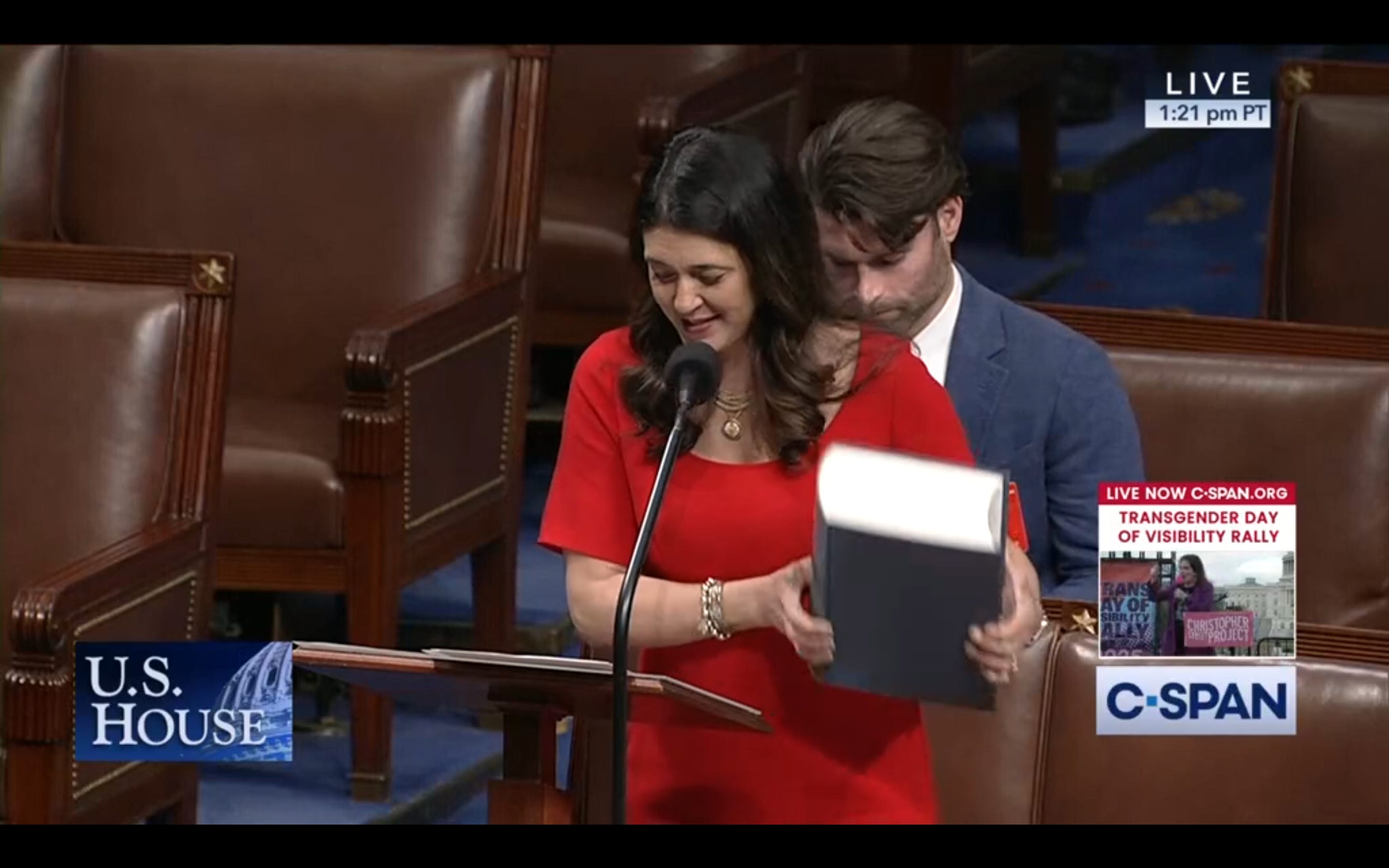
At the end of March, there was a fun, bipartisan back and forth moment on the House floor about the history of this massive tome and trying to save money from printing the “8 pound, 14 ounce book” for the hundreds of offices and individuals who request them in the House and Senate.
According to the [Government Publishing Office] GPO, the number of print copies of CONAN requested in 2012 by the House, Senate, and the Joint Committee on Printing was just over 1,000. Ten years later, in 2022, the number of requested copies dropped to just 659.
The Congressional Budget Office (CBO) estimated that legislation in the 118th Congress (H.R. 7592) that would “eliminate the requirement that the Library of Congress (LOC) prepare hardbound copies of the Constitution of the United States of America: Analysis and Interpretation” would reduce the Library of Congress’ operating costs by $4 million over four years.
We’ve already replaced the book with online resources that receive millions of pageviews a year: https://constitution.congress.gov/
(That legislation and this cycle’s equivalent, H.R. 1234, is sponsored by Representative Stephanie Bice (R-Oklahoma), who brought it to my attention. It is co-sponsored by Representative Joe Morelle (D-New York).)
Both members of Congress, during floor debate about the issue, noted that it is increasingly critical to free up Congressional Research Service staff time to address more critical issues. I want to give an extra nod to Congressman Morelle who tied the latest Supreme Court decision in Loper Bright Enterprises v. Raimondo into this very issue:
While we may not all agree on the merits of this decision, there is bipartisan consensus that unless we want the courts deciding every single open policy question, then we, Congress, have to draft laws that are far more technical in specificity than we do now. That cannot be done without major assistance from subject matter experts such as those at the Congressional Research Service.
To that end, it is my hope that the millions we save from passing this bill will be promptly reinvested in CRS to enhance its capacity, an absolutely essential step as Congress continues to work to maintain our Article I authorities and prerogatives.
Now, I’m admittedly a huge fan of printed books - digital pages disappear, resources fall out of date and link rot is a huge problem. But I also advocate regularly for Congress catching up to the times, innovating and experimenting so constituents receive help faster, and we save taxpayer dollars and move away from the, “What’s a million dollars here or a million dollars there?” mindset.
Thanks, as always, for reading.